
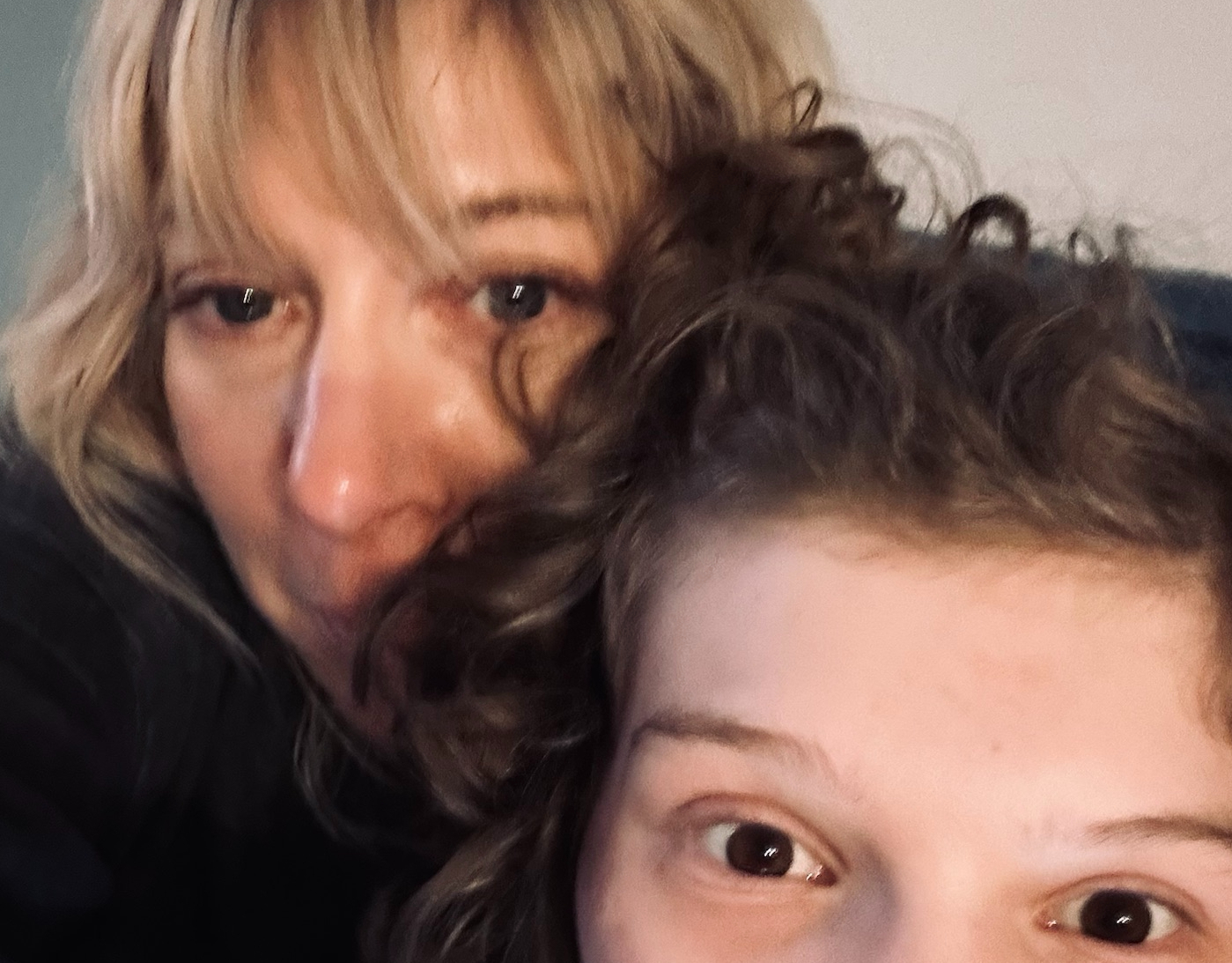
Being my daughter’s person is both an extraordinary blessing and an immense responsibility. On the blessing side, I can see the love in her eyes. I can feel it when she walks right up to me and presses her lips against mine. When she grabs my hand to hold as we take our evening walks. When she joins me on the couch to snuggle or when she hugs me from behind while I’m doing dishes. Most times when I pick her up from after-care at the end of our days, her face lights up. She has taught me the art and the joy of non-verbal communication.
But being someone’s person also means you get the bad along with the good. When Brielle is upset, I am the first one to hear about it. When she needs something, I am the first one she comes to. When she is frustrated or angry, I am the one to feel her wrath.
Several years ago, Brielle was in a bad place. Here’s excerpts from a desperate letter I wrote to her school back in 2019:
“I rarely find myself at a loss for how to deal with Brielle, but we’ve hit a rough patch and I need your help. I just don’t know how to handle the relatively new behaviors. First off, is the OCD. Brielle has to rearrange things and freaks out when you redirect her. Second, is the hitting of the head. When she gets frustrated, she is punching herself in the head. Sometimes with one hand, to her forehead, sometimes with two fists to the side of her head. It is only a matter of time before she gives herself a concussion. If I try to stop her, she goes nuts. I have been to just about every doctor. We recently switched her mood medicine to one that seems to be helping a bit with the OCD. I have had xrays and ultrasounds done, Bree was very constipated so she is now on a diet of laxatives and probiotics and whole grain and fiber-rich foods. Her constipation is less, her hitting/pushing on herself is not. I could really use some strategies.”
I didn’t mention in that letter that Brielle would also hit or squeeze me during that time when she was frustrated. I couldn’t blame her. She had a lot going on internally and couldn’t verbally express herself. Instead she would come over and squeeze my hand so hard as she stared at me, begging me with her eyes to figure it out.
One day during that awful period, I was at the mall with Brielle and her brother. Those mall trips usually didn’t last more than an hour, but they were a way to get out of the house for a bit. She liked getting out of the house back then, but her emotions would get the best of her.
As we were approaching an hour at the mall, Bree became more and more upset. I probably should have thought the next step through a bit better, but I didn’t. Instead, I stepped onto a down escalator with my kids. It was just at that moment where Bree grabbed me in frustration, nearly knocking me off my feet. If not for my son on the stair in front of me, I likely would have tumbled down the entire escalator.
I don’t share that story to get sympathy. I share that story to illustrate the dangers of her behavior at that time and show how desperate I was to make them go away. And why all these years later, when such behaviors from her are few and far between, I’m still on edge. Any autism parent knows the roller coaster of behaviors never stops. Which is why the call I got last week was a cautious celebration.
The call was from the behavioral therapist at her day program, asking me if I consented to stopping the behavioral support program that she had been put on all those years ago to help manage her violence to herself and others. My daughter is mostly in a better place now. I’m afraid to jinx myself, but her frustrated behaviors are rare (desperately knocking on wood as I type this). She rarely is aggressive with me now, and rarely injurious to herself. I am not sure exactly why. I had her treated for a bunch of possible reasons — frequent urinary tract infections, constipation, her menstrual cycle just some of them. We followed the behavior plan, which helped us learn to stay calm and to calm her down gently. Whatever we did, it helped.
So while I agreed that Bree doesn’t need a behavioral program, I made sure to ask what happens if her behaviors flare up, because that’s always a risk, and was assured they could restart the program as easily as they could stop it.
The other part of this that makes me cautious is that Bree’s dangerous behaviors make her eligible for support we really need, regardless of those behaviors. It’s a frustrating reality. We don’t need less help, we need more.
Only a few days after I got that call from the behavioral therapist, I met my ex halfway to get my daughter after a weekend away. I could see she was agitated and noticed a rash on her face and neck. As we got in the car to head home, she used her communication device to ask me for a piece of gum, something she chews for anxiety. I gave her one, but not a minute later she was asking me for another piece. When I said no, she freaked, screaming and hitting her legs.
One thing all parents learn — not just autism parents – is that giving in is not the right response to improper behavior. But for autism parents the proper response is crucial. So I did not give her another piece of gum, but I tried to soothe her by playing her favorite music and rubbing her leg as I drove. She eventually calmed down a bit after I gave her some antihistamines for the rash.
Now I know this behavior must have been rash related, but it still reinforces my theory that behaviors never really disappear. They go away for a bit, but they’re never gone. And as long as I am around, I will be the unfortunate but understandable recipient of them.
On a positive note, Bree was feeling better by the next morning. Her agitation dissipated, and her smile lit up the house. After dinner, the weather was beautiful, so we took one of our beloved walks around the neighborhood. As we walked, she had a huge smile on her face, and she kept reaching for my hand or arm. We passed neighbors who called out to her and she happily waved to them all.


Leave a Reply