
The Centers for Disease Control and Prevention’s list of people at higher risk to get sick from Covid-19 includes older adults and people with serious chronic conditions like heart disease and diabetes. But there is a whole other population in danger, a group of adults who can’t speak for themselves, because they can’t speak at all.
Those with severe autism and other similar disorders are at high risk of any disease in large part because often, they can’t communicate their pain or have trouble doing so. They can’t ask for an x-ray or ultrasound. They don’t go to specialists unless it’s to treat their autism. Their inner ailments often aren’t discovered until they’re obvious, and therefore in advanced stage.
While some 3 million people in the U.S. have some form of autism, about one-third of them are nonverbal or almost nonverbal and/or have an intellectual disability, according to data from Autism Speaks, a research and advocacy group. A large study out of Sweden in 2016 found the average age of death for people with autism was 54 years old, compared to 70 years for those without. The rate of premature death was higher across nearly all causes, including diseases of the circulatory, respiratory and digestive system.
In the age of coronavirus, the hygiene warnings are everywhere: Avoid touching your eyes, nose and mouth. Cover your cough or sneeze with a tissue. Wash your hands. A lot.
So answer this: How do you keep someone with autism clean in the age of the new coronavirus when they compulsively pick stuff up off the ground and shove it in their mouths? When they touch everything they pass?
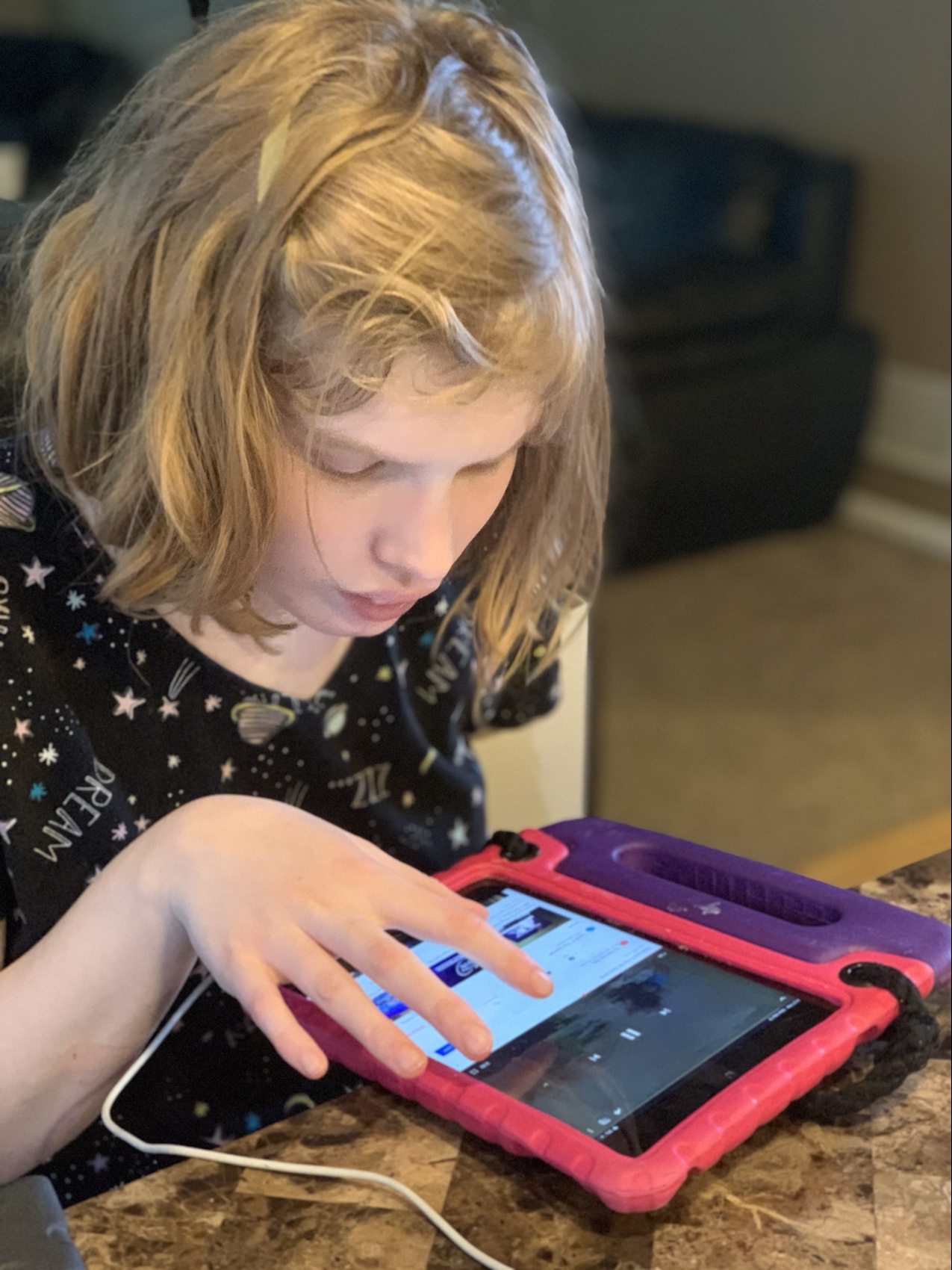
Imagine a population that has no understanding of the concept of germs. Take Brielle, for example, a non-verbal 18-year-old in New Jersey with severe autism and obsessive-compulsive disorder. She communicates with an app on her pink iPad mini that she wears everywhere like a cross-body purse.
She presses buttons on the app to tell her companion she wants a piece of gum, a drink, the bathroom. There is no button, however, for “I think I have coronavirus.” She can’t express that she has a stomachache or chills or a headache. Her teachers have tried numerous times to get her to communicate those kinds of abstract things with her iPad, but it is not a concept she is able to grasp. And so she depends on her mom (that’s me) to watch for signs.
But there’s more, because Brielle and so many others with severe autism have no concept of hygiene. They go through the motions of taking a shower, brushing their teeth, washing their hands, without any understanding of the purpose.
One of Brielle’s favorite things to do on the weekends is walk through the mall. Her OCD is soothed by picking up or straightening up things out of order; a fallen blouse, a stray straw wrapper, a piece of toilet paper in the public bathroom.
There’s always the option of just keeping them home until the worst of the virus passes. But then there’s the reality. Parents have to work, and autistic kids thrive on activity. They hate being cooped up in the house. They love getting out in the community. If you take that away, then there’s a good chance that your smiling, happy child or adult becomes a violent, screaming nightmare.
I don’t even want to think about what would happen if they start closing malls and stores. Or worse yet, if her school had to shut.
So in the age of Covid-19, your trip to the mall becomes an exhausting effort to keep your kid away from the germs. You walk in armed with a bottle of sanitizer in one pocket and disinfecting wipes in the other. You try to keep your kid’s hands to themselves, which pisses them off. You wipe their hands any time they touch anything. You put Purell in her backpack and hope her teachers use it. And you pray it’s enough.
Leave a Reply