
They don’t scream because they like the sound. They scream because it’s the only way they know to make themselves heard.
My daughter typically is a happy kid, as far as autism goes. I literally just knocked on wood — I do so every time I say something is good, as if that will prevent it from turning bad. You would too if you had heard the way Bree screamed when she was about four or five years old.
At the time, it was just me and my two kids living in a second-floor condominium. Bree was in a bad way back then, very frustrated with her inability to communicate. She screamed a lot. I mean, a lot. It was a very tough time for us.
With some medical and behavioral interventions, the screams lessened over time. Now, when she’s upset, I know something is bothering her. She was upset last week, and she screamed a lot. After a few days of hell, I finally figured out it was the new medicine I was giving her to help her sleep.
So imagine that. Imagine you take a new medicine, and it makes you nauseous. Or dizzy. Or it gives you a pounding headache. But you don’t speak. And you don’t know how to communicate your pain. So your mom keeps giving it to you. Wouldn’t you be frustrated to the point of screaming? I know I would.
Did you know that sleep problems and stomach issues are common among children with autism? So now imagine that you aren’t sleeping well, and you have an awful case of diarrhea or constipation. Wouldn’t you be cranky? I sure would be.
Most people with autism also have sensory issues. That means they can be over-sensitive or under-sensitive to noise, light, clothing, temperature. A loud restaurant, a barking dog, bright light, cold water, all can trigger extreme anxiety and cause meltdowns.
My daughter hates buttons and zippers against her skin. She can’t stand it when our dog barks. And super-crowded restaurants or loud family get-togethers bother her. She, like many other kids with autism, deals with the overload by stimming, or engaging in repetitive behavior or sounds that help distract them from what’s bothering them.
My Little Pony (hers, not mine) is my daughter’s No. 1 stim. She will dangle it by its hair and watch it move, over and over again. We rarely leave home without her My Little Pony. She does not bring it to school. With a lot of work, I have managed to convince her not to bring it into restaurants/shops. But for the most part, I let her stim. It helps calm her.
It used to be very difficult to stop my daughter from screaming once she started. I found myself getting upset, and any mom knows that the more upset you get, the more upset they get.
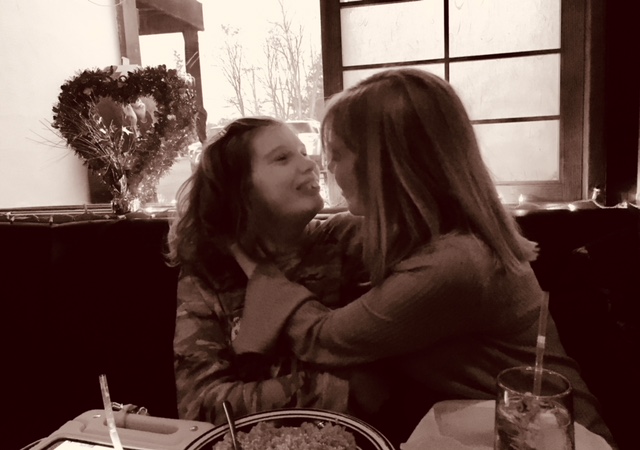
Now, when Bree gets upset, I do my best to stay calm, and I try to turn her frown upside down. I will hug her, or rub her arms. I will sing to her or play her favorite songs. I will distract her from what bothered her by offering something else. Tantrums that used to last an hour or more now are over in less than 10 minutes, most of the time.
Screaming isn’t the only behavior shared by frustrated kids with autism. Some hit themselves or others. Some bang their heads. My daughter will throw herself down on the floor and land on her knees. She has the black and blue legs to show for it. She has done this in the middle of a supermarket aisle, when I wouldn’t let her open a juice box. She has done this in the doctor’s office, when she was tired of waiting.
I used to be horrified and embarrassed, and pick her up and run out of the place. I was so bothered by people staring. Now I’m a tough autism mama who, for the most part, focuses on her kid. I’ll bend down to rub her back, or even get on the ground with her until she is calmed and ready to get up again.
Staring or judging doesn’t help. Neither does shaking your head and whispering to your friend. These parents and caregivers have got enough to deal with, don’t you think? Better to give a sympathetic smile, ask if there’s anything you can do to help. Or just walk away and let them do their thing.
Before I had my kids, I may have been one of those people who stopped and stared. I didn’t know any better. I’m sure many people don’t know any better. But being in that situation, where my kid was suffering and screaming, opened my eyes.
I can spot a kid or adult with autism a mile away. And when I’m out and about without my kids, and I hear an autistic person crying or see their parent having a tough time, I show compassion, not disgust.
I know it may be annoying. I know you may be trying to have a quiet meal, or you may have a headache of your own. But trust me, them being there is good for the parent, good for the kid, and good for you.
This may be the first time that autism mom (or dad) has been out of the house in weeks. It takes unbelievable courage and determination to bring their kid out in public, knowing there’s a good chance they will have a meltdown. But the more they do it, the more they will learn. The more society will learn. And the more they will be accepted, tantrums and all.
Leave a Reply